The Problem with Corporate Internal Communication
Enterprise internal communication faces a paradox: more channels than ever, yet messages still get missed. Important emails sit unread in overflowing inboxes. Slack notifications get buried in channel noise. Intranet posts reach only desk-based employees. For factory workers, field staff, retail employees, and remote teams, SMS cuts through all the noise. Every employee has a phone. Every phone receives SMS. No app installation, no login required, no learning curve. SMS is the universal denominator of workforce communication.
Corporate SMS Use Cases
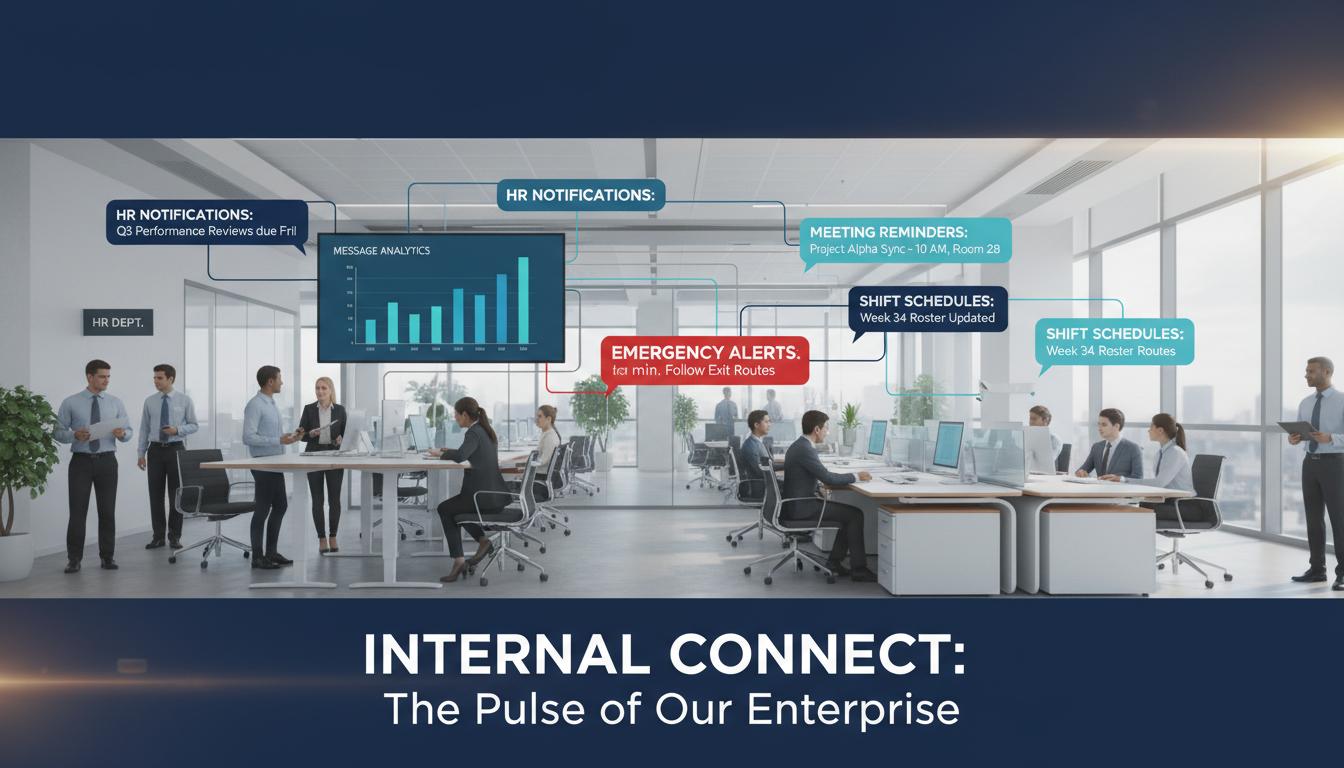
- 1Meeting reminders — automated alerts 15 minutes before scheduled meetings
- 2Shift scheduling — notify employees of shift changes, overtime opportunities
- 3Emergency alerts — fire drills, safety incidents, building evacuation notices
- 4HR updates — policy changes, holiday announcements, leave approvals
- 5Payroll notifications — salary credit alerts, payslip availability
- 6Training schedules — workshop reminders, certification deadlines, e-learning nudges
- 7IT alerts — system downtime, password expiry, security breach warnings
- 8Event invitations — town halls, team outings, corporate events
- 9Attendance management — late arrival notices, absenteeism follow-ups
Reaching Deskless and Frontline Workers
India's workforce includes millions of deskless employees — factory workers, delivery personnel, retail staff, security guards, and field technicians. These employees rarely check email and may not have company app access. SMS is the only reliable channel to reach them. Manufacturing plants use SMS for shift coordination and safety alerts. Logistics companies notify drivers about route changes. Retail chains update store staff about promotions and inventory. Hotels coordinate housekeeping and concierge teams through group SMS.
Emergency Communication Systems
During emergencies — natural disasters, security threats, IT system failures, or health crises — enterprises need to reach all employees within minutes. Our emergency alert system supports mass broadcasts to entire organizations or targeted alerts by location, department, or role. Two-way SMS enables employees to confirm receipt or request assistance. Integration with building management systems and IoT sensors enables automated emergency triggers for critical incidents.
HR and Payroll Communication
HR departments streamline employee communication through automated SMS workflows. Send interview reminders to candidates, onboarding instructions to new hires, and exit interview requests to departing employees. Payroll teams notify employees about salary credits, tax deduction changes, and reimbursement approvals. Annual performance review reminders, training completion notifications, and policy update acknowledgments keep the workforce informed and compliant.
Integration with Enterprise Systems
BulkSMS.ca APIs integrate with enterprise communication platforms including Microsoft Teams, Slack, SAP SuccessFactors, Workday, and custom HRMS systems. Automated triggers from these systems generate SMS notifications without manual intervention. Calendar integrations send meeting reminders, HRMS integrations trigger birthday greetings and anniversary wishes, and ITSM platforms notify about ticket updates. Single Sign-On (SSO) integration enables secure portal access for communication administrators.
Key Takeaways
Corporate internal SMS is the most reliable channel for workforce communication, especially for deskless employees who do not regularly access email or company apps. From meeting reminders to emergency alerts, HR updates to shift scheduling, SMS ensures every employee receives critical information instantly. Enterprise system integration, two-way messaging, and automated workflows make internal SMS a strategic communication investment.