Introduction
Voice call marketing remains one of the most personal and effective communication channels in India. With 60-70% answer rates and the ability to convey emotion through voice, it is a powerful tool for businesses that want to stand out in a world of text-based messaging.
What is Voice Call Marketing?
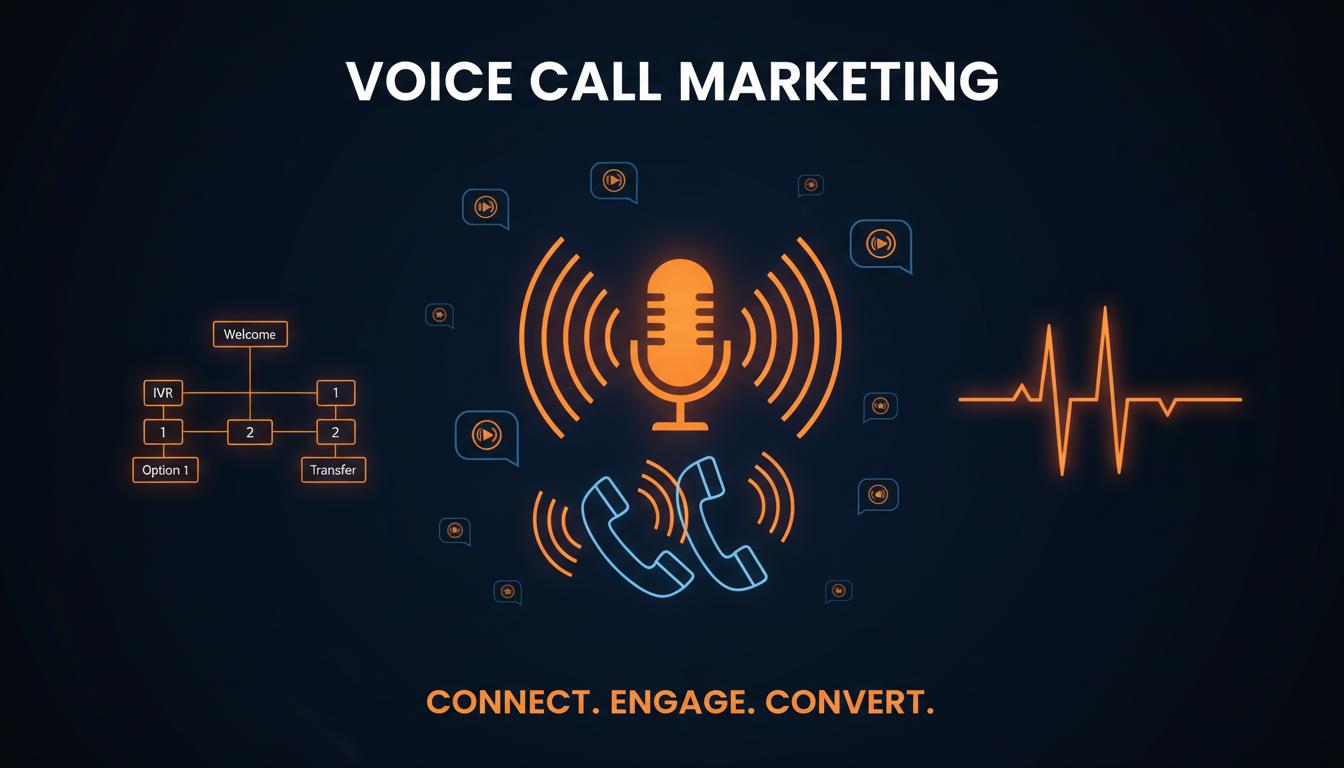
Voice call marketing (also called OBD — Outbound Dialing) sends pre-recorded voice messages to a list of phone numbers. When the recipient answers, the message plays automatically. It works for both mobile and landline numbers across India.
Best Use Cases for Voice Calls
- 1Payment and EMI reminders with urgency
- 2Appointment confirmations and reminders
- 3Political campaign outreach and voter education
- 4Festive greetings and seasonal offers
- 5Customer satisfaction surveys
- 6New product launch announcements
- 7Event invitations and RSVP collection
- 8Delivery and pickup notifications
Voice Call Best Practices
- 1Keep messages between 15-30 seconds
- 2Start with a personalized greeting (customer name)
- 3Use a professional, friendly voice recording
- 4Include a clear single call-to-action
- 5Call between 10 AM and 6 PM (respect TRAI timings)
- 6Provide an opt-out option in every call
- 7Test your recording on multiple devices before sending
- 8Segment your audience for targeted messaging
- 9Track answer rates and adjust timing accordingly
- 10Always use DLT-registered templates and headers
Sample Voice Call Scripts
Here are three effective scripts for different scenarios: Payment Reminder: "Namaste {name} ji, this is a reminder from {company}. Your EMI of Rs. {amount} is due on {date}. Please pay before the due date to avoid late charges. To pay now, press 1 or call {number}. Thank you." Festive Offer: "Hello {name}, {company} wishes you a Happy Diwali! Get flat 30% off on all products till {date}. Visit {url} or call {number} to shop now. Limited period offer!" Survey: "Hi {name}, we value your feedback. Please take 30 seconds to rate your recent experience with {company}. Press 1 for Excellent, 2 for Good, 3 for Average. Thank you!"
Voice Call vs SMS — When to Use Which
| Urgency | Voice: High / SMS: Medium |
| Personal Touch | Voice: Very High / SMS: Medium |
| Cost | Voice: Higher / SMS: Lower |
| Answer/Read Rate | Voice: 60-70% / SMS: 95-98% |
| Best For | Voice: Reminders, surveys / SMS: Offers, alerts |
| Emotion | Voice: Conveys tone / SMS: Text only |
Key Takeaways
Voice calls work best for urgent reminders, surveys, and personalized outreach. Keep messages under 30 seconds, use professional recordings, and always include a clear CTA. Combine voice calls with SMS for a multi-channel approach.