Introduction
Banking and financial institutions face a unique challenge: they must communicate with millions of customers instantly, securely, and reliably. A missed OTP or delayed fraud alert can result in financial loss and damaged trust. This is why banks rely on bulk SMS and voice calls as their primary customer communication channels.
Why SMS Is Essential for Banking
- 1Instant delivery — OTPs arrive within 5 seconds
- 2Works on all mobile phones — no app installation needed
- 399%+ delivery rate across all telecom networks
- 4DLT-compliant and TRAI-regulated for security
- 5Two-factor authentication via SMS is industry standard
- 6Cost-effective — costs less than a rupee per message
- 7Real-time delivery reports for audit trails
Critical Banking Use Cases
| OTP Delivery | Login verification, transaction authorization, password reset |
| Transaction Alerts | Debit/credit notifications, fund transfers, bill payments |
| EMI Reminders | Loan EMI due dates, overdue notices, late payment alerts |
| Fraud Alerts | Suspicious activity detection, card blocking notifications |
| Account Updates | Balance alerts, statement availability, KYC reminders |
| Marketing | New product offers, credit card upgrades, loan eligibility |
| Regulatory | GST invoice alerts, tax filing reminders, compliance notices |
OTP SMS — The Security Backbone
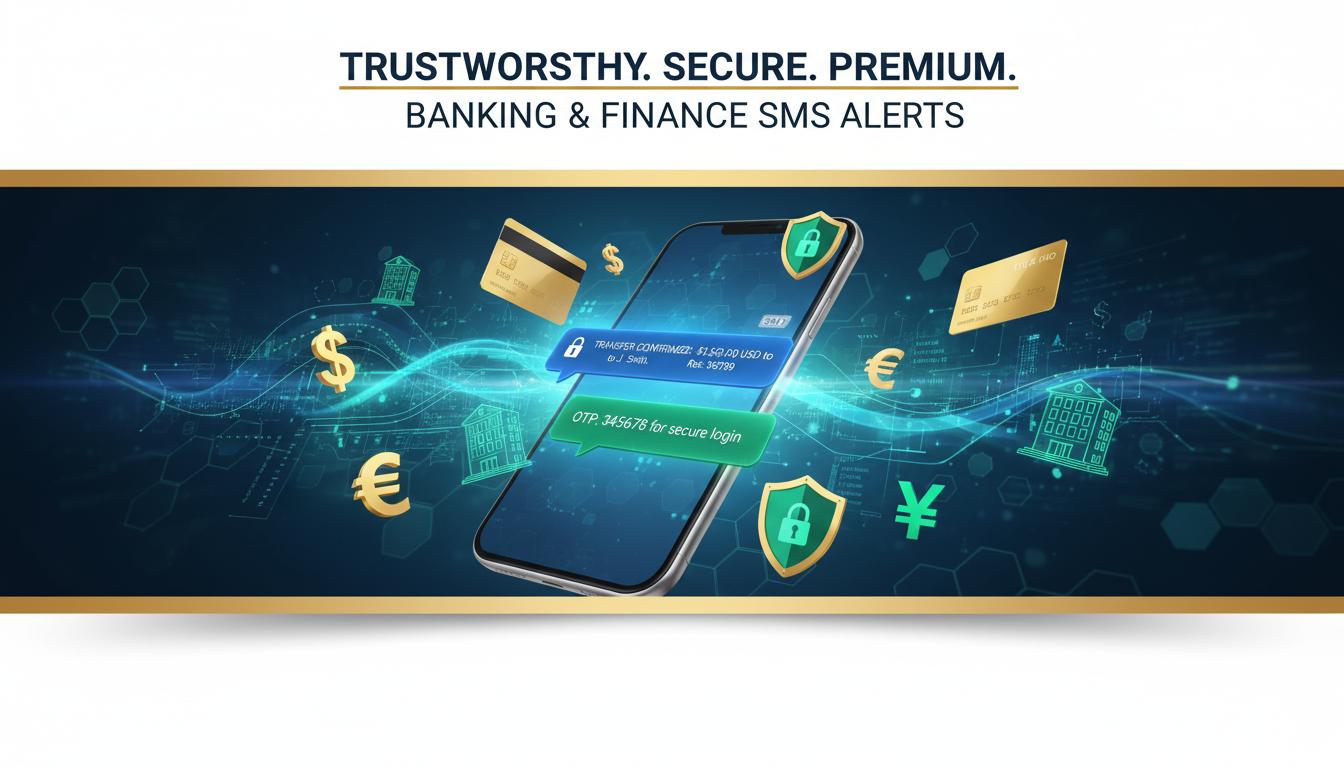
One-Time Passwords (OTPs) delivered via SMS are the most widely used form of two-factor authentication in Indian banking. When a customer initiates a transaction, the bank generates a unique OTP and sends it via SMS to the registered mobile number. The customer enters this OTP to complete the transaction. This simple process adds a critical layer of security — even if someone has the customer's password, they cannot complete transactions without the OTP sent to their phone.
Why Banks Also Need Voice Calls
While SMS handles most banking alerts, voice calls serve a complementary role. Banks use voice calls for: critical fraud alerts where immediate attention is required, payment reminders for overdue loans with personalized voice messages, IVR-based balance inquiries and mini statements, and welcome calls for new account holders and credit card customers. Voice calls have higher attention-grabbing power and are harder to ignore than text messages.
Fraud Prevention with SMS and Voice
- 1Instant SMS alert on every transaction — customers spot unauthorized activity immediately
- 2Voice call for high-value transactions requiring additional verification
- 3SMS notification when card is used at a new merchant or location
- 4Voice-based payment reminders reducing NPA (Non-Performing Assets)
- 5Two-factor authentication via SMS for all online banking activities
- 6Automated voice calls for credit card due date reminders
- 7Real-time delivery tracking to ensure alerts actually reach customers
Compliance Requirements for Banking SMS
- 1DLT registration mandatory for all SMS senders
- 2Transactional SMS route required for OTPs and alerts
- 3End-to-end encryption for sensitive financial data
- 4Template approval for all message types
- 5Audit trail and delivery receipts for regulatory compliance
- 6Data localization — financial data must remain in India
- 7RBI guidelines compliance for customer communication
Key Takeaways
Banks need both bulk SMS and voice calls for comprehensive customer communication. SMS delivers instant OTPs and transaction alerts. Voice calls provide critical fraud warnings and payment reminders. DLT compliance and transactional routes ensure security and reliability.